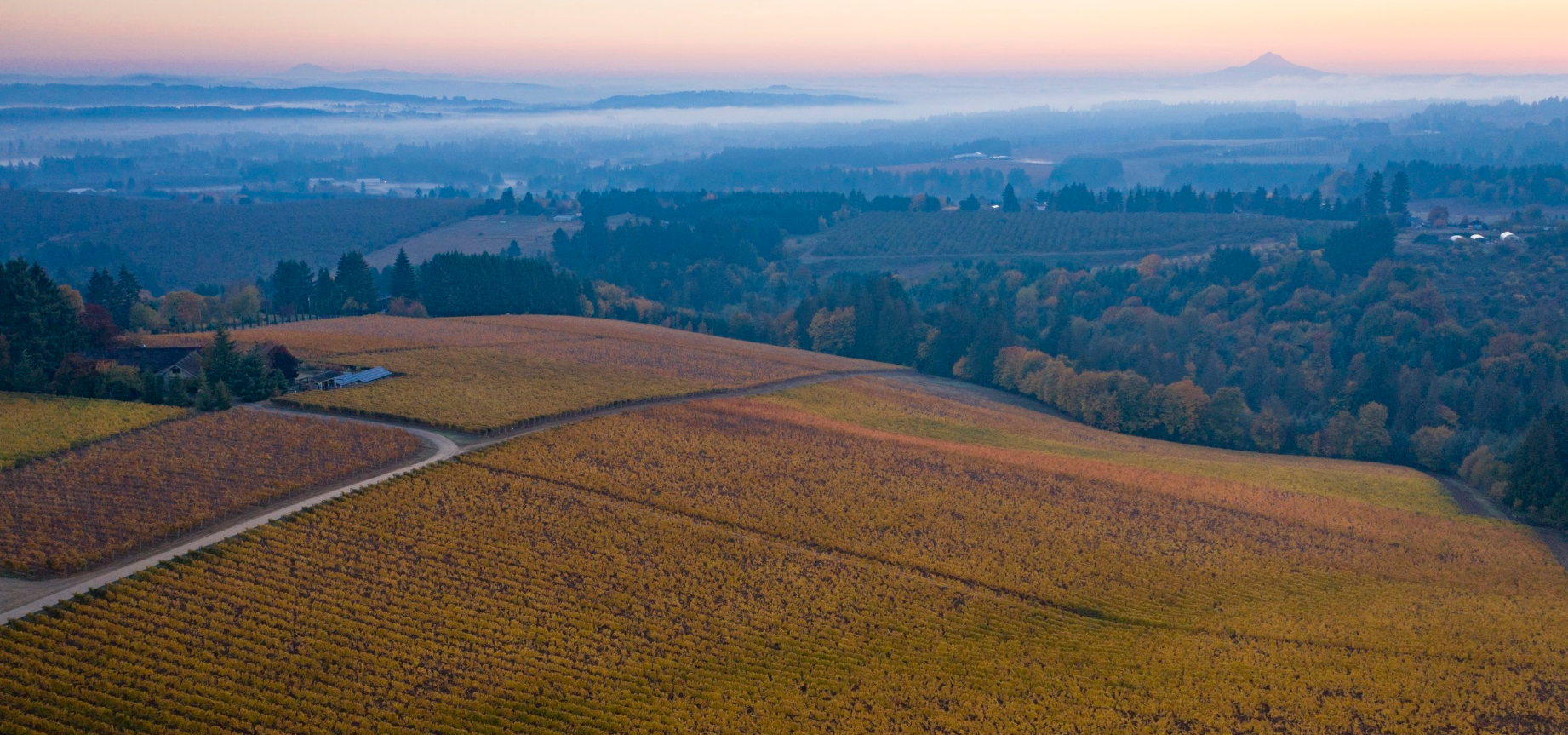
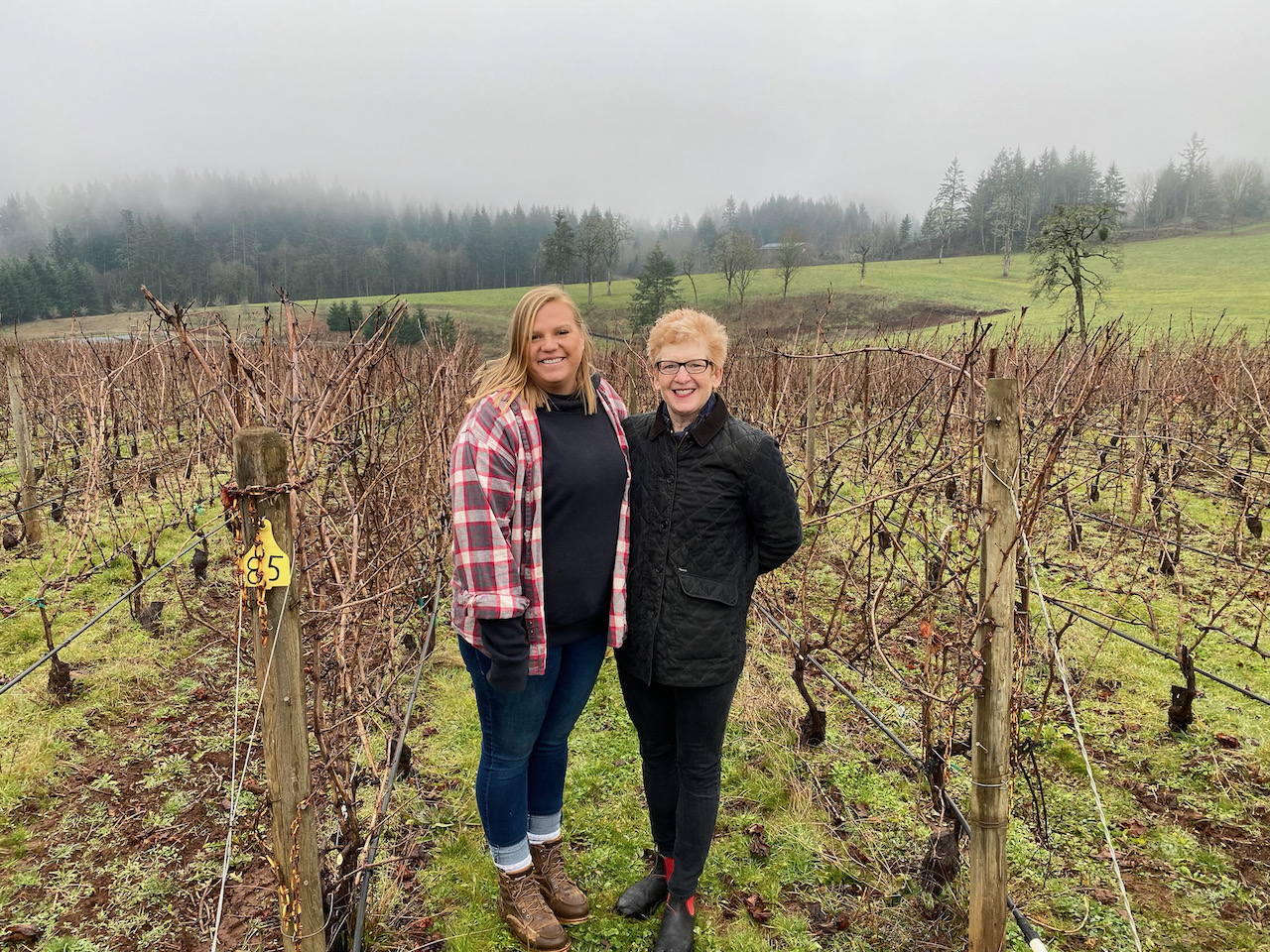
Each year in the Dundee Hills, the vineyard quietly shifts from winter dormancy to renewal. What begins as tightly sealed buds along dormant canes soon becomes the first visible sign of a new vintage. This stage is known as bud break — and while it may appear subtle, it is one of the most critical moments in the growing season.
At Knudsen Vineyards, bud break signals far more than spring’s arrival. It marks the official start of the vintage and sets the trajectory for everything that follows.
What is Bud Break?
Bud break occurs when the vine transitions out of winter dormancy and small buds begin to swell and open, revealing tiny green shoots. These shoots will eventually develop into leaves, tendrils, and most importantly, grape clusters.
In Oregon, bud break typically begins between late March and mid-April, depending on temperature patterns and site elevation. Warmer early spring conditions may encourage earlier growth, while cooler seasons delay the process. Timing matters — because once the vine wakes up, it becomes vulnerable.

What Triggers Bud Break?
While several factors influence timing, air temperature remains the dominant driver of bud break. Grapevines require a certain accumulation of warmth — often measured as “growing degree days” — before buds will push.
However, bud break is not controlled by temperature alone. Several interacting factors determine when and how quickly it occurs:
1. Air Temperature (Primary Driver)
Consistent warming trends encourage earlier bud break. Cooler springs delay it. A few warm days are not enough; vines respond to sustained temperature shifts.
2. Soil and Root Temperature
Even if air temperatures rise, cold soils can slow vine response. Healthy, well-drained soils — like the red clay-loam Jory soils of the Dundee Hills — warm steadily in spring, supporting uniform vine activation.
3. Species and Cultivar
Different grape varieties break bud at different times. Pinot Noir, for example, tends to break bud relatively early, which increases frost risk but allows for a longer growing season. Chardonnay may respond slightly differently depending on clone and site.
4. Number of Buds Left at Pruning
Winter pruning decisions influence spring growth. Leaving more buds can distribute vine energy across multiple shoots, sometimes moderating early vigor. Fewer buds can result in stronger individual shoot growth. This connects directly to cane pruning strategy — a practice that shapes both yield and balance for the season ahead.
5. Bud Position Along the Cane
Not all buds break at the same time. Buds positioned closer to the base of the cane may develop differently than those further out. This variation affects shoot uniformity and can influence canopy management decisions later in the season.

Time vs. Rate of Bud Break
There is an important distinction between when bud break begins and how quickly it progresses.
- Timing refers to the calendar date when the first buds open.
- Rate refers to how rapidly the remaining buds follow.
A vineyard may experience early bud break but uneven shoot development if temperature fluctuations occur. Conversely, a slightly later bud break followed by steady warmth can produce uniform growth — often beneficial for consistent flowering and fruit set.
Uniformity matters. Even shoot growth supports balanced ripening later in the season.
Why Bud Break Is a Critical Stage
Bud break is often described as the most fragile point in the vineyard year. Young shoots are highly susceptible to frost damage, which can significantly reduce yields if temperatures drop below freezing. A single cold night can impact potential fruit set for the season.
Beyond frost risk, the timing of bud break influences:
- The length of the growing season
- Flowering and fruit set timing
- Ripening pace and harvest window
- Overall balance between sugar, acidity, and phenolic development
In short, bud break determines how much time the vine has to mature fruit before harvest. A longer growing season often supports complexity and balance — two hallmarks of great Pinot Noir and Chardonnay.
Read about past growing season vintages HERE.

Early vs. Late Bud Break: How It Affects the Vintage
Bud break timing influences both risk and opportunity.
Early Bud Break
- Increases frost exposure risk
- Extends the potential growing season
- Can support complex flavor development if conditions remain stable
- May lead to earlier harvest timing
Late Bud Break
- Reduces frost risk
- Shortens the growing season
- Can preserve acidity
- May compress ripening and harvest windows
Neither scenario guarantees quality. What matters is how the remainder of the season unfolds. However, bud break sets the clock. From this point forward, vine development follows a sequence: shoot growth, flowering, fruit set, veraison, and harvest.
The earlier the start, the longer the runway — but also the longer the period of vulnerability.
Why Bud Break Matters for Production
From a production standpoint, bud break influences:
- Potential yield (through shoot and cluster development)
- Labor planning (frost protection, canopy management timing)
- Disease pressure windows
- Harvest projections
If frost damages primary shoots, secondary buds may emerge — but often with reduced fruitfulness. This directly impacts crop size and potentially wine volume for the vintage.
For estate vineyards like Knudsen, bud break is when monitoring intensifies. Weather patterns are watched closely. Frost risk mitigation strategies are prepared. Uniformity across blocks is assessed. These early observations guide decisions for the months ahead.

How Bud Break Shapes the Vintage
Every vintage tells a story, and bud break writes the first chapter.
An early bud break may mean a longer season and the potential for layered ripeness. A later start can preserve acidity and freshness. Neither is inherently better — but each influences the style and character of the wines to come.
For Pinot Noir in particular, the balance between ripeness and natural acidity is essential. Bud break begins the countdown to harvest, determining how much time the fruit will have to develop aromatics, tannin structure, and depth. By the time veraison arrives and the vineyard turns from green to shades of purple, the foundation has already been laid months earlier.
It is the first chapter of the vintage — where climate, soil, vine genetics, and stewardship intersect. In the quiet emergence of green shoots along the cane, the story of the year begins once again.