Oregon Pinot Noir is often spoken about as a single category, but in reality it is a mosaic of microclimates, soils, and elevations. The differences between regions are not subtle — they are structural. Understanding Oregon’s American Viticultural Areas (AVAs) reveals why Pinot Noir from one hillside can taste dramatically different from another just a few miles away.
To explore Oregon wine is to explore geography.
Pinot Noir is one of the most transparent grapes in the world. Thin-skinned and sensitive to environment, it reflects the land with unusual clarity. In Oregon, AVAs function like a sensory map — a visible link between landscape and glass.

Willamette Valley AVA Map
What Is an AVA?
An American Viticultural Area (AVA) is a federally recognized wine-growing region defined by measurable geographic features. Boundaries are determined by soil composition, elevation, rainfall patterns, temperature behavior, and topography. These environmental conditions influence how grapes ripen, how vines respond to stress, and how wines ultimately express themselves.
AVA distinctions are not marketing tools — they are agricultural realities. Pinot Noir simply makes those realities easier to taste.
Mapping the Willamette Valley
Willamette Valley is the heart of Oregon Pinot Noir. Stretching north to south, the valley contains a series of nested AVAs sprawling 3,438,000 acres (5372 square miles) that have been shaped by volcanic eruptions, ancient sea beds, and glacial flood deposits. These geological layers created a patchwork of soil environments that now define regional identity.
The valley sits between the Coast Range and Cascade Mountains, forming a protective rain shadow while still allowing cool Pacific air to moderate temperatures. Elevation shifts, slope exposure, and marine airflow produce microclimates where even small geographic changes alter ripening patterns.

Oregon Jory Soil of the Willamette Valley
The Geological Story Beneath the Vines
The Willamette Valley is a study in deep time. Millions of years ago, volcanic activity laid down basalt foundations. Later, ancient oceans deposited marine sediments. Catastrophic Missoula Floods carried layers of silt and gravel across the valley floor.
These events created three major soil families that shape Oregon Pinot Noir:
Volcanic soils
Iron-rich, well-draining, and formed from ancient lava flows. These soils regulate vine vigor and often produce wines with brightness, floral lift, and refined structure.
Marine sedimentary soils
Derived from compressed sea beds. Nutrient-poor and stress-inducing, they encourage deep root systems and concentrated fruit.
Alluvial soils
Flood-deposited valley floor soils that are more fertile and moisture-retentive. While productive, they tend to produce more vigorous vine growth and are less common in premium hillside Pinot sites.
Soil is not passive. It governs water retention, temperature buffering, microbial life, and root behavior. Pinot Noir transmits these underground influences directly into aroma, texture, and structure.

Credit: A to Z Wineworks
Climate: Oregon’s Slow Ripening Advantage
Oregon sits at the northern edge of reliable Pinot Noir production. This geographic position creates a long, cool growing season defined by gradual ripening rather than heat spikes.
The region experiences:
-
Cool springs
-
Warm but moderate summers
-
Extended daylight hours
-
Cool nights
-
Long autumn finishes
This allows sugars to accumulate slowly while acidity is preserved. Wines gain flavor complexity without becoming heavy. The growing season is less about heat and more about time.
Marine influence creates further variation. AVAs exposed to ocean airflow remain cooler and windier. Sheltered regions accumulate warmth more quickly. Elevation amplifies day-night temperature swings, enhancing aromatic development.
Small climate differences produce measurable sensory outcomes.
How the Willamette Valley AVA Differences Translate Into Flavor
Climate and soil do not just influence how grapes grow — they influence what we taste. Pinot Noir functions almost like a translator, converting environmental signals into flavor patterns.
While every vintage and producer varies, AVAs show consistent tendencies. These are not rigid rules, but recognizable signatures shaped by geology and temperature.
Think of AVA identity as a spectrum rather than a formula.

Chehalem Hills AVA | Adelsheim Vineyard
Chehalem Mountains: A Study in Soil Diversity
Chehalem Mountains is one of the most geologically diverse AVAs in Oregon. Rather than a single defining soil, the region contains volcanic basalt, marine sedimentary rock, and wind-deposited loess. Elevation ranges are wide, creating multiple microclimates within a single boundary.
Higher vineyard sites experience cooler nights and extended ripening, preserving acidity and aromatics. Lower slopes accumulate warmth more quickly, producing broader fruit expression. This interplay makes Chehalem less about a singular style and more about variation shaped by site.
Common fruit profile
Red cherry, blackberry, black raspberry, cranberry
Aromatic elements
Baking spice, rose, dried herbs, mineral tones
Structure and texture
Balanced acidity, medium tannin, layered palate
Chehalem wines often show a dual personality — brightness from elevation paired with depth from soil complexity.

Dundee Hills AVA | Knudsen Vineyards
Aerial View over Knudsen Vineyard, Dundee Hills, Willamette Valley, Oregon
Dundee Hills: Volcanic Elegance and Red Fruit Precision
Dundee Hills is defined by deep red Jory soil formed from ancient basalt flows. These volcanic soils regulate vine vigor, drain efficiently, and encourage steady ripening. The result is fruit purity and structural finesse rather than weight.
Elevation and south-facing slopes capture sunlight while cool nights preserve acidity. Wines from this AVA often emphasize clarity, floral lift, and red-fruited brightness.
Common fruit profile
Red cherry, raspberry, wild strawberry, cranberry
Aromatic elements
Rose petal, violet, orange peel, baking spice
Structure and texture
Silky tannins, medium body, lifted acidity, clean finish
Dundee Hills Pinot Noir is frequently associated with transparency and refinement — wines that feel composed and precise.

Eola-Amity Hills AVA
Eola-Amity Hills: Wind-Driven Structure and Tension
The defining force of Eola-Amity Hills is wind. Marine air flows daily through the Van Duzer Corridor, cooling vineyards and slowing ripening. This airflow thickens grape skins and increases phenolic structure.
Soils are a mix of volcanic and sedimentary material, creating mineral tension beneath the fruit. Wines often carry darker tonal range and firm structure.
Common fruit profile
Black cherry, blackberry, plum, blueberry
Aromatic elements
Savory herbs, crushed stone, forest floor, smoked tea
Structure and texture
Firm tannins, elevated acidity, linear structure
These wines feel energetic and age-worthy, with a strong backbone supporting deep fruit.

Laurelwood District AVA | Ponzi’s Aurora Vinyard
Laurelwood District: Loess-Driven Lift
The Laurelwood District AVA, one of Oregon’s newest AVAs, was approved in June 2020. Defined by deep loess soils — fine wind-blown silt layered over basalt. These soils retain moisture while remaining well-drained, encouraging even vine growth and consistent ripening.
Higher elevations expose vineyards to cooling air, preserving freshness. Wines from Laurelwood tend toward elegance rather than density.
Common fruit profile
Strawberry, red cherry, red currant
Aromatic elements
Floral spice, fresh herbs, orange peel
Structure and texture
Bright acidity, fine tannins, focused finish
Laurelwood Pinot often feels lifted and aromatic, emphasizing precision over power.

Lower Long Tom AVA
Lower Long Tom: Cool Climate Freshness
Lower Long Tom sits in a cooler western pocket of the valley with strong Pacific influence. Reduced heat accumulation leads to extended hang time and vibrant acidity.
The wines emphasize freshness and tension rather than richness.
Common fruit profile
Cranberry, tart cherry, raspberry
Aromatic elements
Green herbs, tea leaf, floral tones
Structure and texture
High acidity, light-to-medium body, crisp finish
These wines often feel delicate, refreshing, and highly expressive aromatically.

McMinnville AVA
McMinnville: Savory Depth and Structure
Closer proximity to the Coast Range gives McMinnville stronger marine influence. The McMinnville AVA currently has over 1600 acres of wine grapes planted and continues to grow in size. Cooler conditions and sedimentary soils produce wines with darker fruit and pronounced savory complexity.
Wind exposure enhances structure and phenolic grip.
Common fruit profile
Black plum, dark cherry, blueberry
Aromatic elements
Tobacco, wet stone, dried herbs, spice
Structure and texture
Firm tannins, fresh acidity, earthy finish
McMinnville Pinot often feels serious and structured, trading sweetness for complexity.

Mount Pisgah AVA | Open Claim Vineyards
Mount Pisgah, Polk County: Elevated Precision
Mount Pisgah, Polk County, Oregon AVA
This high-elevation AVA sits on the valley’s western edge where altitude and marine air extend ripening. Mixed soils provide balanced vine stress.
Large day-night temperature swings amplify aromatics and acidity.
Common fruit profile
Red currant, tart cherry, pomegranate
Aromatic elements
Wild herbs, crushed rock, floral spice
Structure and texture
Bright acidity, tight structure, linear finish
These wines feel taut and energetic, with mountain-driven lift.

Ribbon Ridge AVA
Ribbon Ridge: Compact Precision
Ribbon Ridge is one of the smallest AVAs in the country but produces highly refined wines. Its sheltered bowl-shaped topography creates stable ripening conditions.
Marine sedimentary soils contribute mineral depth.
Common fruit profile
Tart cherry, pomegranate, red currant
Aromatic elements
Tea leaf, dried herbs, mineral dust
Structure and texture
Fine tannins, bright acidity, focused palate
Ribbon Ridge Pinot emphasizes clarity and age-worthy structure.

Tualatin Hills AVA
Tualatin Hills: Aromatic Finesse
Rolling elevations and mixed soils define Tualatin Hills. Cooling airflow moderates heat while preserving freshness.
Wines lean toward elegance and aromatic nuance.
Common fruit profile
Cherry, raspberry, red plum
Aromatic elements
Rose, spice, forest floor
Structure and texture
Silky tannins, medium body, elegant finish
These wines emphasize finesse over power.

Van Duzer Corridor AVA | Van Duzer Vineyards
Van Duzer Corridor: Wind-Shaped Power
Constant marine wind defines this AVA. Thickened grape skins and concentrated phenolics produce wines of intensity balanced by acidity.
Common fruit profile
Blackberry, cassis, dark cherry
Aromatic elements
Cracked pepper, smoke, savory spice
Structure and texture
Dense mid-palate, high acidity, strong tannic frame
These wines feel muscular yet vibrant.

Yamhill-Carlton AVA
Yamhill-Carlton: Earth-Driven Richness
Marine sedimentary soils and slightly warmer temperatures produce grounded, textured wines.
Common fruit profile
Black raspberry, dark cherry, boysenberry
Aromatic elements
Cocoa, earth, mushroom, leather
Structure and texture
Broad palate, plush mouthfeel, rounded tannins
These wines feel layered and generous, emphasizing earth alongside fruit.
Block-Level Expression at Knudsen
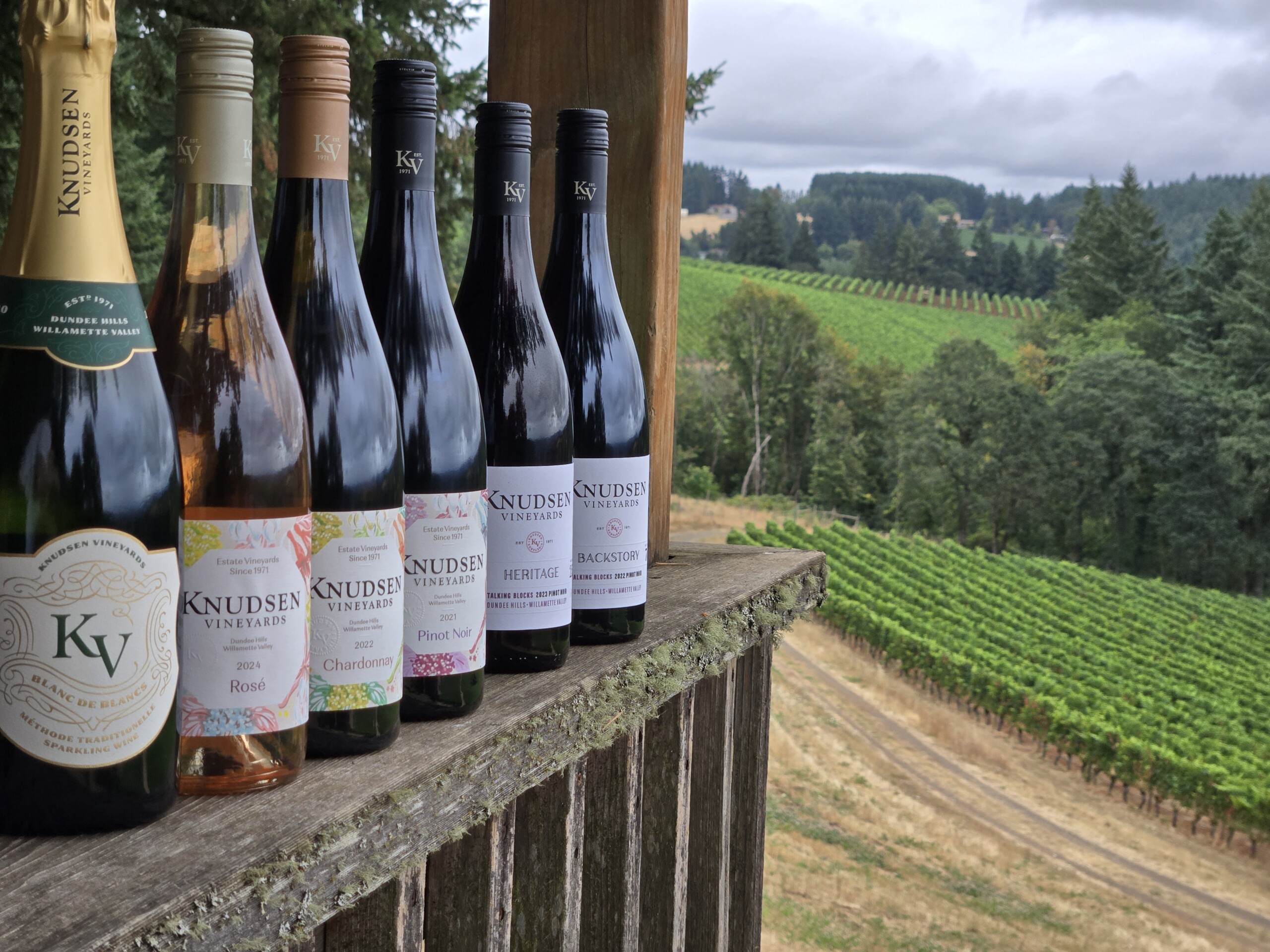
Within a single AVA, variation continues at the block level. At Knudsen Vineyards, differences in slope, vine age, exposure, and clone create micro-terroirs within the estate. Harvest decisions are made parcel by parcel. Fermentation lots are kept separate to preserve nuance.
Blending becomes an act of composition.
AVA defines the accent. Blocks define the voice.
Vintage Variation
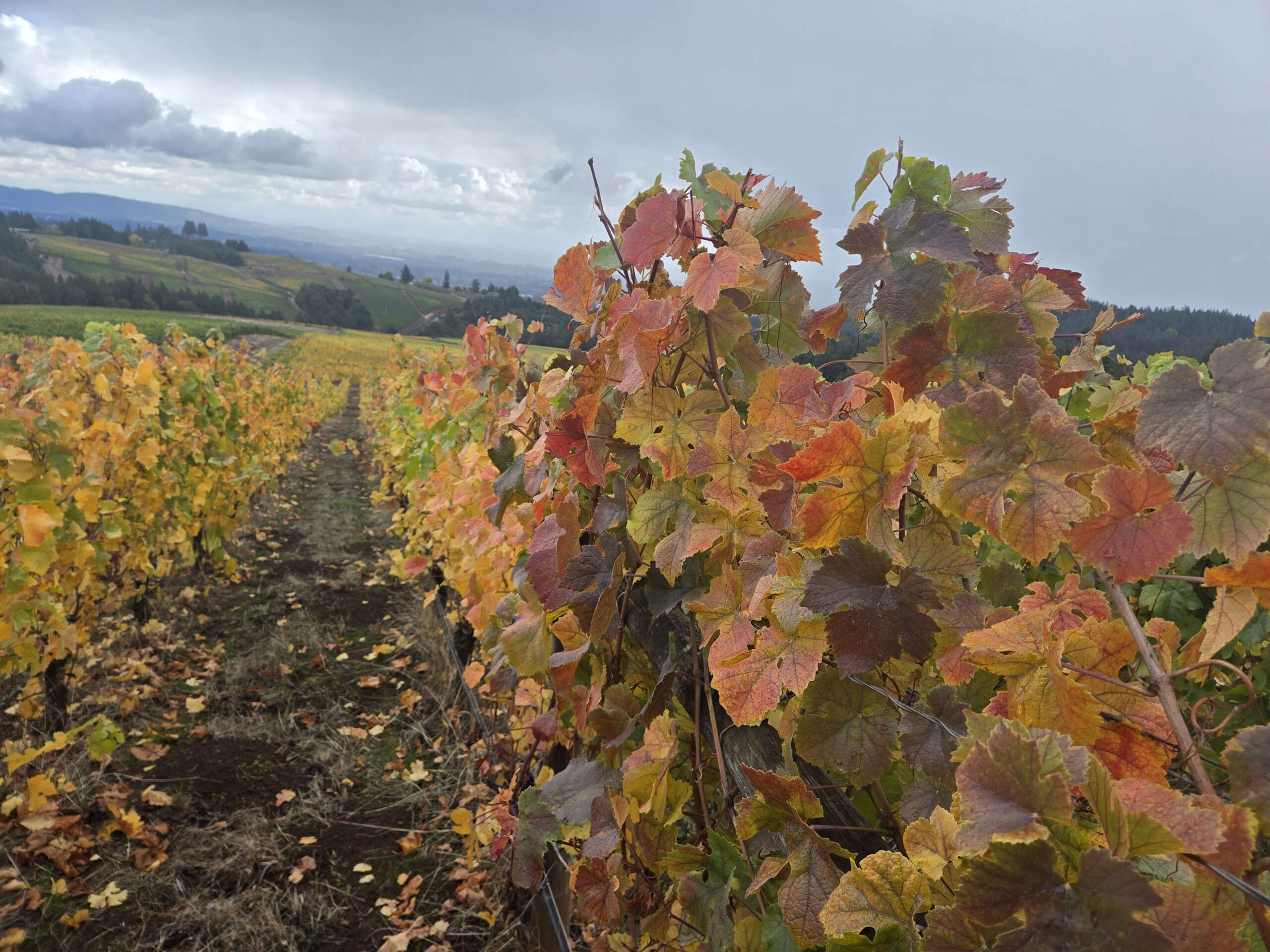
No two years taste the same. Cooler vintages highlight acidity and florals. Warmer vintages emphasize darker fruit and texture. Long autumns deepen complexity.
Oregon embraces vintage character as part of authenticity. AVA identity exists inside yearly variation, not outside it.
Sustainability as Terroir Preservation
Sustainable farming protects the conditions that allow terroir to speak. Cover crops strengthen soil, biodiversity supports natural balance, and water stewardship protects ecosystems.
At Knudsen Vineyards and across Oregon, LIVE and Salmon Safe certification represent long-term commitments to land health. Stewardship is not separate from wine quality — it enables it.
Healthy land produces expressive fruit.
How to Taste the Differences
Taste AVAs side by side. Keep glassware and temperature constant.
Observe fruit spectrum, acidity, texture, aromatic tone, and finish. Patterns emerge naturally. Tasting becomes interpretation.
Wine education begins with attention.
A Living Map
Oregon’s AVAs are an evolving study of place. Each bottle is a geographic document — a record of soil, climate, and human decision-making.
To explore Oregon Pinot Noir is to travel through volcanic flows, ancient oceans, and wind-shaped hillsides without leaving the glass.
Once you begin tasting place, you never stop noticing it.